
Thirty pieces is small enough to lose money on and large enough to learn from. Here is the sequence we would run ourselves for a first production order.
Most first orders fail for boring reasons: the bulk plating is a shade off the sample, the stone size drifts by a tenth of a millimetre, or the boxes arrive three weeks after the jewellery. None of those are design problems. They are sequencing problems, and a thirty-piece run gives you just enough room to sequence it properly.
This is the order we would run ourselves, written for someone placing a first production order rather than sampling for a catalogue.
1. What thirty pieces actually costs
A quotation is built from six lines, and only one of them is about the number of pieces. Knowing which line moves when you change the quantity is the difference between negotiating and guessing.
| Cost line | What drives it | How to control it |
|---|---|---|
| Mould and CAD | Whether the design is new or adapted from an existing one | Custom runs are free of mould charge from 30 pieces per design, and USD 45 below that. Starting from a stock design removes the line entirely. |
| Metal | Finished weight in grams, not the size of the piece | A 2.6 g ring and a 17 g bracelet can carry the same design language and very different metal cost. Ask for the weight per piece in writing. |
| Stones | Grade, size and how many are set | D-colour moissanite in small pavé sizes is the volume cost, not the centre stone. Ask what size the small stones are. |
| Labour | Setting density and finishing | A fully paved face takes several times the setting time of a plain band. This is where a cheap quote usually hides. |
| Plating | Colour and thickness | Rhodium, 18K yellow and rose gold are priced differently, and thicker plating costs more. Specify thickness, not just colour. |
| Freight and duty | Weight, volume and Incoterm | Thirty pieces ship by air courier, so freight is a small line. Ask which Incoterm the quote uses so the landed cost is comparable. |
If you want the arithmetic behind a quote, how pricing is calculated sets out the same six lines. The minimum itself is on the MOQ page, and the mould charge is explained on the design fee page.
One habit worth adopting now: ask two suppliers to quote the same design with the weight stated in grams. Quotes that do not state weight are not comparable, because the cheapest per-piece price is usually the lightest piece.
Budgeting is easier once you separate the one-time lines from the repeating ones. Mould and CAD are paid once, on the first run, and never again for that design. Metal, stones, labour and plating repeat with every order, so they are the lines that respond to volume. A supplier who unbundles the one-time charge from the per-piece price is easier to compare against a second quote, and much easier to plan a second order with.
2. Choosing a design that survives production
The designs that cause trouble are rarely ugly. They are the ones where a stone is held by two thin prongs, where a hinge has to work in a 1 mm wall, or where a curve is so tight that the plating cannot reach inside it.
There are two routes, and they cost different things:
- Adapt a stock design. More than 5,000 designs already exist in production tooling, so changing the stone colour, the plating or the length of a chain adds no mould cost and no CAD time. This is the fastest route to a first order.
- Draw something new. A photo or a sketch becomes a CAD model, you approve the render, then a wax print and a casting follow. It is a normal process, but it adds a round of approval before the sample stage even starts.
A photo is usually enough to start: making a design from a photo covers what the picture has to show. If you only have a rough idea, you do not need a finished brief to ask. What counts as custom, and what does not, is on the custom page. If the design is the reason you are switching suppliers, confidentiality is worth reading before you send drawings.
3. The sample is a test, not a preview
Sampling takes about 5 to 7 days. Treat the sample as an inspection with pass and fail conditions, because whatever you approve becomes the reference for the bulk run.
- Push every stone sideways with a plastic probe. A stone that moves will fall out in wear, and pavé that is not tight is the most common defect in silver.
- Check the setting height. Stones set too high catch on knitwear and snap prongs; set too low they go dull.
- Weigh the sample against the quoted weight. A 0.4 g shortfall on a bracelet is a hollow piece, not a bargain.
- Compare the plating colour under daylight and under warm indoor light. Rose gold is the shade most likely to drift between batches.
- Work the clasp twenty times. A box clasp that is stiff on day one will not loosen in a good way.
- Keep the approved sample sealed and dated, and make it the standard the bulk is measured against.
Ask what happens to the sample charge. Some suppliers credit it against the bulk order and some keep it, and the answer decides whether sampling two candidates is affordable. Sampling two is usually cheaper than re-tooling one design that turns out to be unmakeable at volume, because the failure shows up on a single piece instead of on thirty.
The sequence, and who does what, is on the sampling process page. If you are working to a deadline, how fast a sample can be made explains what can be compressed and what cannot.
4. Stone grade, and the certificate your customer will ask for
Moissanite is sold in colour grades, and the grade is the single thing your customer will ask about first. D colour is the colourless grade, and it is what a jewellery brand should be quoting against if the pieces are going to sit next to diamond in a display case.
A GRA card should travel with the stones. The card is only useful if the number on it can be checked, so verify the report number with the issuing lab before you print anything that mentions certification. A supplier who sends a photo of a card but will not send the number is showing you a prop, not a document.
What grades exist and how they differ: moissanite grades. Whether cards are supplied per stone: GRA certified moissanite. How to check a card properly: reading and verifying a GRA report. The same document-first logic applies to the supplier itself, which is what the supplier checklist is for.
5. Plating, hallmarking and what goes on the box
Three finishes cover almost every order: rhodium for a white look, 18K yellow gold, and rose gold. The colour is a plating over solid 925 silver, so the two questions that matter are how thick the layer is and whether the base is silver or brass. Silver can be re-polished and re-plated years later. Brass cannot; it only gets replaced.
Hallmarking and branding are separate jobs and should be planned at the same time as the plating, because both happen after polishing. A 925 stamp inside a band or on a clasp tag is normal; a laser-engraved logo on the reverse of a pendant is normal too. Packaging is the line that gets forgotten until the last week, and printed boxes have their own lead time on top of the jewellery’s.
Finish options: plating and finishes. Durability: will the plating wear off. Stamping: hallmarking as 925 sterling silver. Logos and boxes: logo and packaging.
6. The timeline, from approval to your door
For a thirty-piece run built on an existing design, the calendar is short and predictable. The part that slips is almost always your own approval, not the factory.
| Stage | Working days | What you should be doing |
|---|---|---|
| Sample or pre-production piece | 5 to 7 | Inspect against the list in section three and approve in writing, with photos. |
| Bulk production | 7 to 10 | Confirm packaging artwork now, not later. Ask for in-process photos at casting and setting. |
| Final QC and packing | 1 to 2 | Ask for the pre-shipment inspection report before the balance goes out. |
| Air freight to your door | 7 to 10 | Clear the duty and confirm the delivery address and contact number. |
That is roughly four weeks door to door once the design is fixed, and closer to six if a new CAD model has to be approved first.
Two calendar traps sit outside that table. Factory closures remove about a week from the production calendar each time they fall, and freight queues up for another week afterwards, so an order that lands in one of those windows takes roughly twice as long as the numbers suggest. The other trap is your own artwork: printed boxes and branded cards are made by third parties, and their lead time runs alongside the jewellery rather than after it. Order both at the same moment and the two finish together.
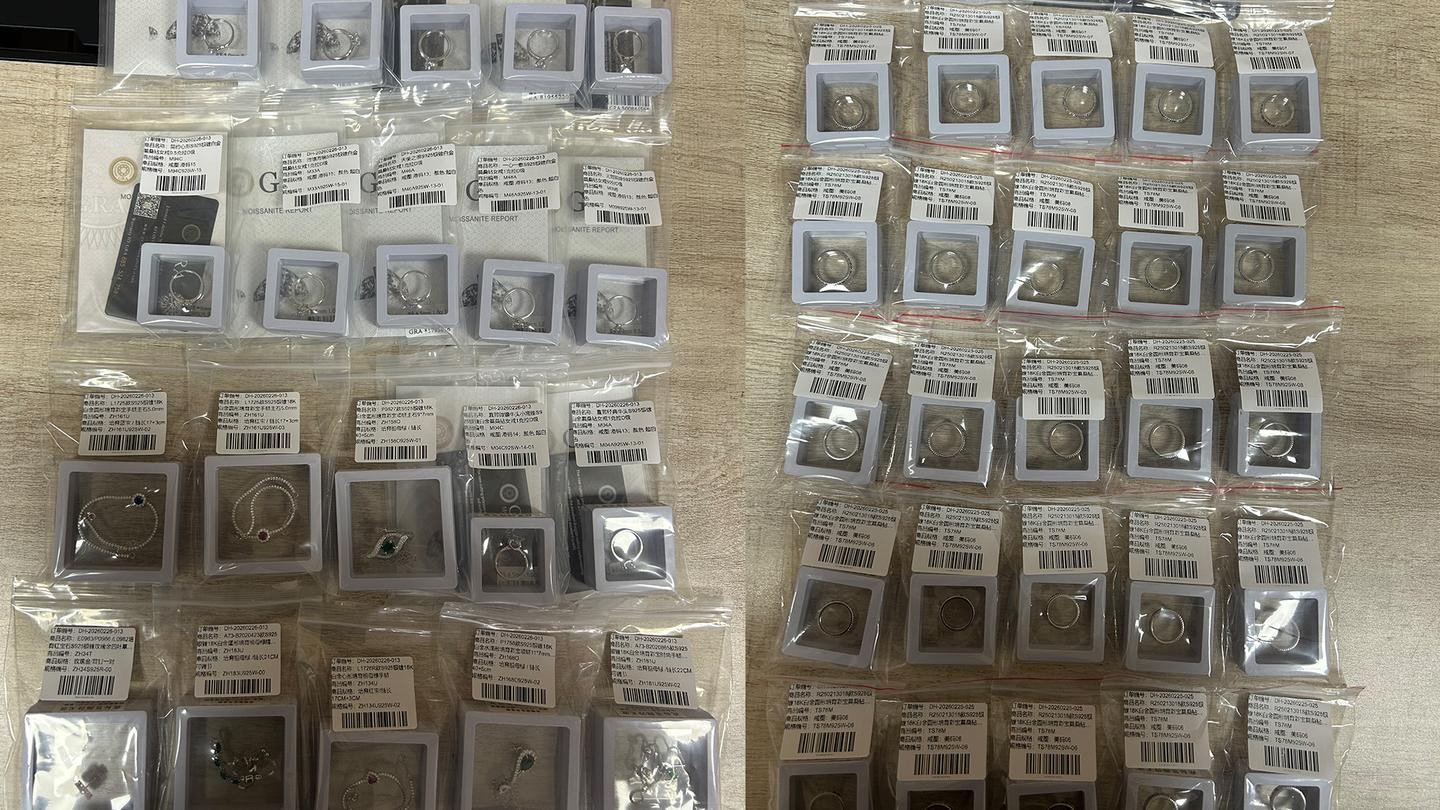
Production timing detail: how long production takes. Transit and duty: how long until the goods reach you. Who pays what: the Incoterms we quote.
7. Paying for a first order without losing leverage
Before you pay, you can walk away for nothing. After you pay, every disagreement costs money, so the useful question is what can be proven in writing before the transfer.
A normal first order runs on a deposit and a balance, with the balance released after a pre-shipment inspection. If you would rather not wire money to a new supplier, an order through Alibaba.com with Trade Assurance gives you a platform record and a dispute route, at the cost of a small platform fee and a slower release.
Payment options: how to pay, including Alibaba.com. Paperwork before payment: the documents you get before paying. Inspection before the balance: checking goods before shipment.
8. Where a first order usually breaks
Three failures account for most of the disappointment on a first run, and all three are preventable with one paragraph in the purchase order.
- The colour drifts. The sample was plated on Monday, the bulk on a different line three weeks later. Fix: state the finish and the thickness, and ask for a plated colour chip from the bulk batch before packing.
- The stones change size. A supplier short of 1.3 mm stones substitutes 1.2 mm ones, the pavé looks sparse, and nobody notices until the pieces are set. Fix: write the stone size and grade into the PO, and inspect against the sealed sample.
- The packaging arrives late. Boxes are printed by a third party, so they can miss the ship date even when the jewellery is ready. Fix: order packaging at the same time as the sample, not after bulk approval.
There is a fourth, quieter failure: approving a sample that the bulk cannot repeat because the sample was made by hand by a senior setter. Ask directly whether the sample represents the production method, and if the answer is vague, that is the answer.
Set a rhythm rather than waiting for news. One update a week, with a photograph at each stage, is enough to catch a problem while it is still cheap to fix. Asking daily trains everyone to send reassuring answers instead of accurate ones, and a first order needs accurate far more than it needs reassuring.
9. A thirty-piece launch checklist
Print this and tick it before the deposit leaves your account.
- Design fixed, with the weight per piece in grams written on the quotation.
- Mould position confirmed: free from 30 pieces per design, USD 45 below that.
- Stone grade and small-stone size stated in the PO, not just in the conversation.
- Plating colour and thickness stated, with a bulk colour chip promised before packing.
- Hallmark and logo positions agreed, and who applies them.
- Packaging ordered at the same time as the sample.
- Sample sealed, dated and photographed from four angles.
- Pre-shipment inspection agreed as a condition of the balance payment.
10. What we need from you to quote
One design reference, the quantity split across colours or lengths, the finish, the packaging requirement, the destination postcode, and the date you need the goods. That is enough to price a thirty-piece run the same day.
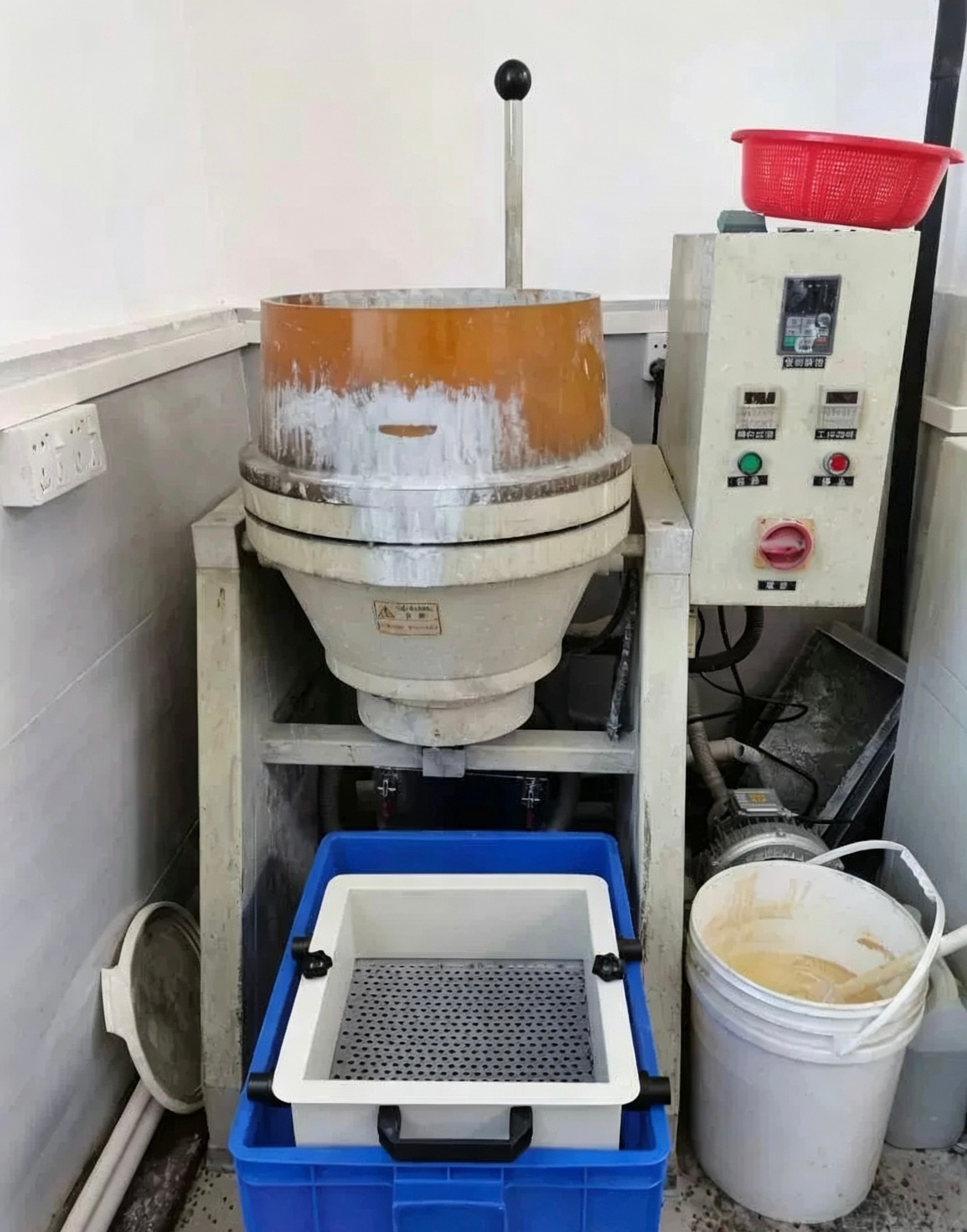
We have been producing moissanite and 925 sterling silver jewellery in Guangdong since June 2010. The workshop is 2,000 square metres with 46 people, running at more than 100,000 pieces a month across more than 5,000 stock designs. Casting, setting, polishing, vacuum plating, laser engraving, hallmarking and final QC all happen in the same building, with four QC checkpoints: incoming material, after casting, after stone setting, and before packing.
Bring a design you already sell: what we need to quote and how fast a price comes back. To see what the range covers, start from all products, rings, bracelets or necklaces.
A first order should leave you with three things beyond the goods: a sealed reference sample, a written specification you could hand to a different supplier if you ever had to, and a landed cost per piece you can price retail against without guessing. If any of those three is missing at the end, the order was a sample, not a launch.
If the answer you get from us is slower or vaguer than this article says it should be, that is worth knowing before you send thirty pieces’ worth of money anywhere.